

Where do chimpanzees live?
Outlines
Where Do Chimpanzees Live? Discover Tanzania's Best Chimpanzee Trekking Destinations
Chimpanzees are among the most fascinating animals in Africa. Known for their intelligence, complex social relationships, and remarkable similarities to humans, these great apes offer one of the most extraordinary wildlife experiences in the African wilderness.
Chimpanzees share approximately 98–99% of their DNA with humans, making them our closest living relatives alongside bonobos. Their ability to use tools, communicate, form social bonds, and adapt to different environments makes them particularly interesting to wildlife researchers and nature enthusiasts.
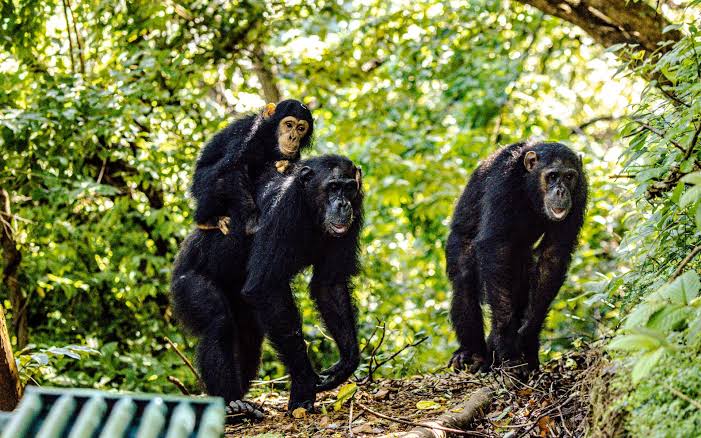
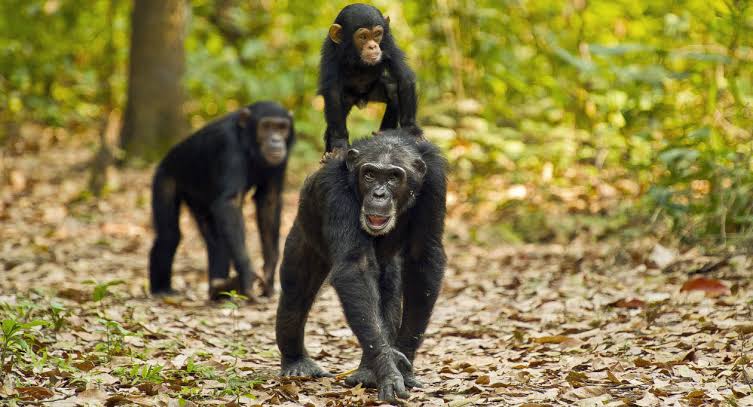
Chimpanzees inhabit tropical forests across Central and East Africa. In Tanzania, some of the best opportunities to encounter these remarkable primates can be found in Mahale Mountains National Park, Gombe Stream National Park, and Rubondo Island National Park.
Whether you are a wildlife enthusiast, photographer, nature lover, or adventurous traveller, chimpanzee trekking in Tanzania offers an unforgettable opportunity to observe these intelligent animals in their natural habitat.
At Rioba Safaris, we celebrate Tanzania's extraordinary wildlife and natural beauty. In this guide, discover where chimpanzees live, how they behave, and the best places to see them in Tanzania.
Key Facts About Chimpanzees in Tanzania
- Mahale Mountains National Park: Famous for its wild chimpanzee population, spectacular forested mountains, and beautiful location along Lake Tanganyika.
- Gombe Stream National Park: Internationally recognised as the home of Jane Goodall's groundbreaking chimpanzee research.
- Rubondo Island National Park: A unique island sanctuary on Lake Victoria, home to an introduced population of chimpanzees.
- Natural habitat: Chimpanzees inhabit tropical rainforests, woodland areas, and other forest ecosystems.
- Social behaviour: They live in complex communities with established relationships, family bonds, and social hierarchies.
- Conservation status: Chimpanzees are classified as Endangered, with habitat destruction, poaching, and disease among their major threats.
Social Life and Natural Habitat of Chimpanzees
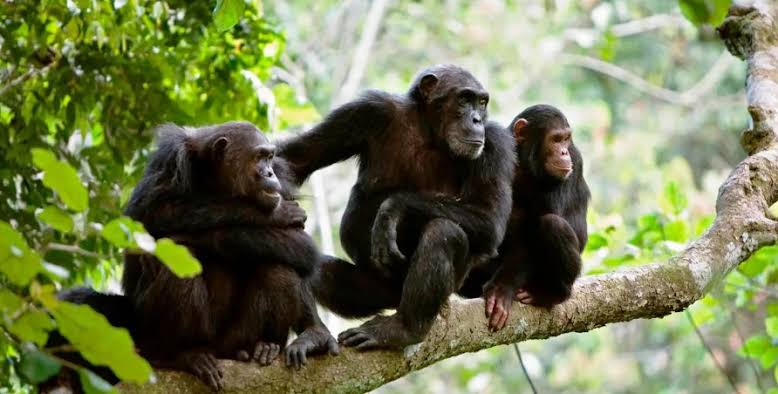
Chimpanzees are highly social animals that live in complex communities. Their groups can contain anywhere from several dozen to more than 100 individuals, although they frequently divide into smaller parties depending on food availability, social relationships, and daily activities.
Unlike many primate species, chimpanzees practise a social system known as fission-fusion. This means members of a larger community regularly separate into smaller groups before coming together again.
Adult males often compete for dominance and leadership positions. However, physical strength alone does not determine social status. Building alliances, maintaining relationships, and gaining the support of other individuals are equally important.
Chimpanzees communicate through a variety of sounds, facial expressions, gestures, and body movements. Excited displays may involve shouting, drumming on tree roots, running, and displaying their strength.
Scientists recognise four subspecies of chimpanzees:
- Western chimpanzees, found mainly in West Africa.
- Eastern chimpanzees, distributed across parts of Central and East Africa.
- Central chimpanzees, inhabiting tropical forests of Central Africa.
- Nigeria-Cameroon chimpanzees, found mainly along the border regions of Nigeria and Cameroon.
Chimpanzees are remarkably adaptable. They inhabit tropical rainforests, woodland environments, and some mountainous forest regions. They depend on trees for shelter, nesting, and protection, as well as access to reliable food and water sources.
Despite their adaptability, chimpanzees face increasing threats from deforestation, agricultural expansion, illegal hunting, and infectious diseases. Protecting their natural habitats is essential for ensuring their survival.
Where Can You See Chimpanzees in Tanzania?
Tanzania is one of East Africa's most remarkable destinations for observing wild chimpanzees. Its western regions contain important forest ecosystems that support some of the continent's most interesting primate populations.
Three national parks stand out for chimpanzee encounters: Mahale Mountains, Gombe Stream, and Rubondo Island.
1. Mahale Mountains National Park
Mahale Mountains National Park is one of Tanzania's most outstanding destinations for chimpanzee trekking. Located along the eastern shores of Lake Tanganyika in western Tanzania, the park is famous for its dense tropical forests, dramatic mountain scenery, and remarkable wildlife.
The park protects one of Africa's best-known populations of eastern chimpanzees. Visitors can join guided forest treks to search for chimpanzees and observe their natural behaviour.
Mahale's chimpanzees live in established communities, and researchers have studied their behaviour for decades. These long-term observations have provided valuable information about their social relationships, communication, feeding habits, and interactions.
Chimpanzee trekking in Mahale is a particularly rewarding experience. Accompanied by experienced guides and park personnel, visitors walk through forest trails while searching for chimpanzees feeding, resting, grooming, or moving through the trees.
Beyond chimpanzees, Mahale offers beautiful mountain landscapes, clear waters, and exceptional birdlife. Its remote location makes it an excellent destination for travellers seeking a peaceful and exclusive wildlife adventure.
How to Get There
Mahale Mountains National Park is accessible by air and boat. Visitors can travel to Kigoma by scheduled or charter flight before continuing by boat to the park. Depending on the arrangement, charter flights may also provide access to the park's airstrip.
2. Rubondo Island National Park
Located in the southwestern part of Lake Victoria, Rubondo Island National Park is one of Tanzania's most distinctive wildlife destinations.
Unlike Mahale and Gombe, where eastern chimpanzees occur naturally, Rubondo is home to an introduced population of chimpanzees. The animals were brought to the island during the 1960s and 1970s as part of a conservation initiative associated with German zoologist Bernhard Grzimek.
The island provided a protected environment where chimpanzees could adapt to life in the African wilderness. Over the years, the population established itself, developed social groups, and reproduced.
Today, Rubondo Island offers visitors a different kind of chimpanzee experience. The animals live in a largely natural forest environment, and sightings can be unpredictable. Exploring the island with knowledgeable guides provides an opportunity to learn about their behaviour and the conservation history of this unique population.
Rubondo is also home to other fascinating wildlife, including:
- Sitatunga antelopes.
- Bushbucks.
- Hippos.
- Crocodiles.
- Monkeys.
- A remarkable variety of bird species.
Its peaceful forests, lakeside scenery, and rich biodiversity make Rubondo Island an excellent destination for travellers interested in nature, photography, and less-visited safari destinations.
How to Get There
Rubondo Island can be reached through Mwanza, one of the main gateway cities in northwestern Tanzania. Visitors can arrange domestic flights, charter transfers, or boat connections depending on their itinerary and accommodation arrangements.
3. Gombe Stream National Park
Gombe Stream National Park is one of the most famous chimpanzee destinations in the world. Situated along the eastern shores of Lake Tanganyika in western Tanzania, this small but internationally significant park is celebrated for its contribution to primate research and wildlife conservation.
Gombe became globally recognised through the pioneering work of British primatologist Dr Jane Goodall, who began studying wild chimpanzees here in 1960.
Her research transformed scientific understanding of chimpanzees and revealed that they use tools, hunt small animals, establish social alliances, and display complex emotional behaviours.
Today, Gombe remains an important destination for chimpanzee trekking and wildlife research.
Visitors can explore its forested hills and valleys with experienced guides, searching for chimpanzees in their natural environment. Watching these primates interact, groom one another, feed, and communicate provides a fascinating insight into their social lives.
Apart from chimpanzees, Gombe is home to several other primate species, forest birds, and beautiful natural scenery.
The park's location beside Lake Tanganyika also creates opportunities to enjoy spectacular lake views and peaceful surroundings.
How to Get There
Gombe Stream National Park is accessed by boat from Kigoma. Travellers can reach Kigoma by domestic flight or other transport connections before continuing across Lake Tanganyika by speedboat or local boat services.
Jane Goodall and Her Remarkable Contribution to Chimpanzee Research
The story of chimpanzees in Tanzania would be incomplete without recognising the extraordinary contribution of Dr Jane Goodall.
In 1960, at just 26 years old, Jane Goodall travelled to what is now Tanzania to study wild chimpanzees in Gombe Stream National Park. Working under the guidance of anthropologist Louis Leakey, she began a research journey that would transform our understanding of primates.
Her observations challenged several long-held scientific beliefs about the differences between humans and other animals.
One of her most important discoveries was that chimpanzees make and use tools. She observed them selecting and modifying small branches to extract termites from their nests.
At the time, tool-making was widely considered a uniquely human characteristic.
Her research also revealed that chimpanzees:
- Form strong family relationships and social bonds.
- Communicate through gestures, sounds, and facial expressions.
- Hunt and share meat.
- Display emotions such as affection, excitement, and distress.
- Form alliances and compete for social dominance.
- Show compassion and comfort distressed members of their communities.
Jane Goodall's decades of research in Gombe helped establish one of the longest-running studies of wild chimpanzees in the world.
Her scientific discoveries and conservation advocacy inspired generations of researchers, conservationists, and wildlife enthusiasts.
Her legacy continues to influence chimpanzee conservation and the protection of Africa's natural ecosystems.
Frequently Asked Questions About Chimpanzees
1. What do chimpanzees eat?
Chimpanzees are omnivores, although fruits make up a significant part of their diet. They also consume leaves, seeds, flowers, roots, insects, termites, honey, bird eggs, and occasionally small mammals.
Their diet changes according to seasonal food availability and the environment in which they live.
2. How long do chimpanzees live?
Chimpanzees can live for approximately 30–40 years in the wild, although their lifespan varies depending on habitat conditions, food availability, disease, and other environmental factors.
In protected environments and captivity, some individuals can live considerably longer.
3. Is chimpanzee trekking possible in Tanzania?
Yes. Tanzania offers excellent opportunities for chimpanzee trekking, particularly in Mahale Mountains National Park and Gombe Stream National Park.
Visitors are accompanied by trained guides and park personnel who help locate chimpanzees and ensure that wildlife viewing follows conservation regulations.
4. Are chimpanzees endangered?
Yes. Chimpanzees are classified as Endangered on the IUCN Red List.
Their populations are threatened by habitat destruction, illegal hunting, disease transmission, and human-wildlife conflict.
Conservation initiatives and responsible tourism play an important role in protecting these remarkable primates.
5. Are chimpanzees dangerous to humans?
Chimpanzees are wild animals and should always be treated with respect. Although they may appear friendly or curious, they are powerful primates capable of unpredictable behaviour.
Visitors should maintain the required distance, follow their guide's instructions, avoid sudden movements, and never attempt to touch or feed them.
6. What is the best time to see chimpanzees in Tanzania?
Chimpanzees can be observed throughout the year, but trekking conditions and visibility vary with the seasons.
The drier months generally offer more comfortable forest trekking conditions. However, the green season can also provide rewarding wildlife experiences, with lush vegetation and beautiful landscapes.
For the best experience, travellers should consider their preferred travel dates, weather conditions, and the specific national park they wish to visit.
7. How strong are chimpanzees?
Chimpanzees are exceptionally strong for their body size. Research suggests that their muscles provide greater dynamic strength than those of humans, particularly during pulling and climbing activities.
However, the popular claim that chimpanzees are seven times stronger than humans is inaccurate. Their strength advantage is more moderate and varies depending on the activity.
Chimpanzees are also capable of short bursts of speed, making them agile and powerful forest animals.
Discover Tanzania's Chimpanzees with Rioba Safaris
Tanzania is much more than the home of the Great Migration, Mount Kilimanjaro, and the endless plains of the Serengeti. Its western forests and beautiful lakeshores protect some of Africa's most fascinating primates.
From the chimpanzee-rich forests of Mahale Mountains to the historic research grounds of Gombe Stream and the unique wilderness of Rubondo Island, each destination offers a different opportunity to appreciate Tanzania's extraordinary biodiversity.
At Rioba Safaris, we believe that every wildlife journey should be meaningful, memorable, and connected to the natural world. Whether you are interested in chimpanzee trekking, wildlife photography, cultural experiences, or exploring Tanzania's lesser-known destinations, we can help you discover an unforgettable African adventure.
Explore Tanzania with Rioba Safaris and experience the wild beauty of Africa, one extraordinary journey at a time.
INSPIRE YOUR JOURNEY